Heating · Furnaces · Equipment comparisons
Single vs. Multi-Stage Furnaces
Understand single-stage, two-stage and modulating heat, and how furnace output differs from blower speed and efficiency.
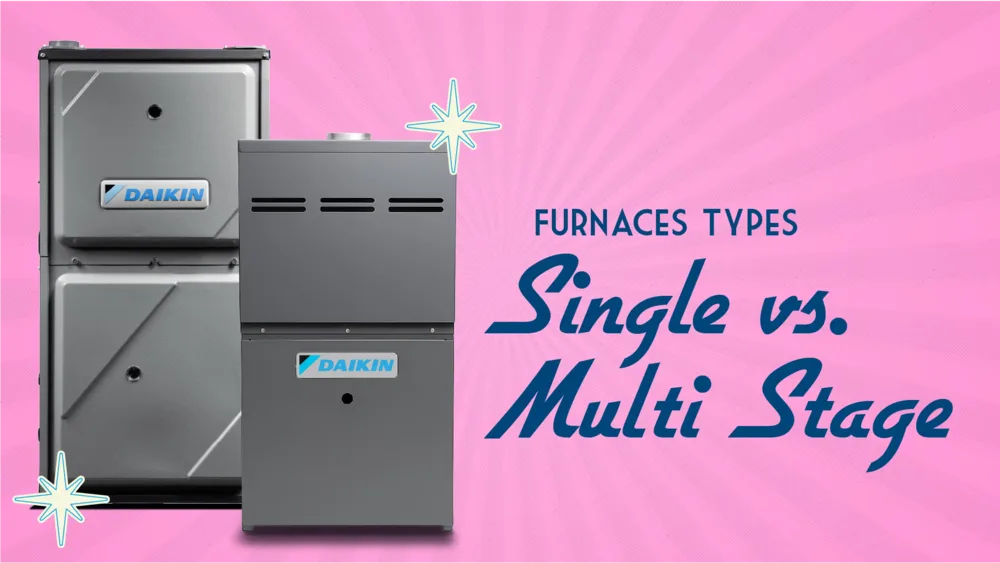
The number of furnace stages describes how its heating output changes. It does not, by itself, tell you the efficiency rating or whether the furnace is the right size for your home.
Single-stage heating
A single-stage furnace has one heating output: the burner operates at its rated output when heat is needed and stops when the thermostat is satisfied. It offers straightforward operation and can be a practical choice when properly sized and installed.
Temperature swings can be more noticeable when a furnace is oversized or its controls and airflow are poorly matched. Those problems should be investigated rather than assuming that changing stages will solve them.
Two-stage and modulating heating
A two-stage furnace can operate at a lower output or a higher output. During milder weather, lower-output operation can help maintain temperature with longer runs. Higher output is available when demand increases.
A modulating furnace adjusts heat output across a model-specific range. Compatible controls, proper setup and adequate airflow are important to realizing the intended comfort benefits. A mild San Antonio winter creates opportunities for part-load operation, but individual results vary.
Blower speed is a separate feature
The burner produces heat; the blower moves air through the home. A variable-speed blower is not the same thing as a modulating burner. Ask the contractor to explain both the heating stages and the blower capabilities of the exact model.
Likewise, an inverter air conditioner or heat pump describes outdoor compressor operation. It does not establish how many stages a separately paired gas furnace has.
What about efficiency?
AFUE measures the share of fuel energy converted to useful heat over a standardized heating season. Compare the actual AFUE ratings rather than assuming every multi-stage furnace has a higher rating than every single-stage furnace.
Operating costs also depend on fuel rates, weather, thermostat settings, insulation, ducts and maintenance. A percentage efficiency difference is not a guaranteed percentage reduction in your utility bill.
Choosing for your home
Start with a heating-load calculation and an airflow assessment. Discuss rooms that overheat, cold spots, noise concerns and your thermostat schedule. Compare written proposals covering:
- Full furnace model and capacity.
- Heating stages, blower operation and compatible thermostat.
- Ductwork, venting, combustion-air and drainage requirements.
- Installation scope and applicable permits.
- Manufacturer parts coverage and separate contractor labor coverage.
Care and safety
Follow the manufacturer's filter and service instructions. Have combustion equipment inspected by a qualified professional, and maintain carbon monoxide alarms according to their instructions. Never bypass a furnace safety switch or attempt gas adjustments yourself. If you smell gas or a carbon monoxide alarm sounds, leave the building and contact emergency services or the gas utility from a safe location.
Visit our heating services page or compare system options with StayCool.
Original article
Adapted from StayCool's furnace-stage comparison.