
AC replacement · Sizing · Home comfort
Choosing the Right AC Size: Why Bigger Isn't Always Better
Learn what cooling capacity means, why oversizing can affect comfort, and how a load calculation guides equipment selection.
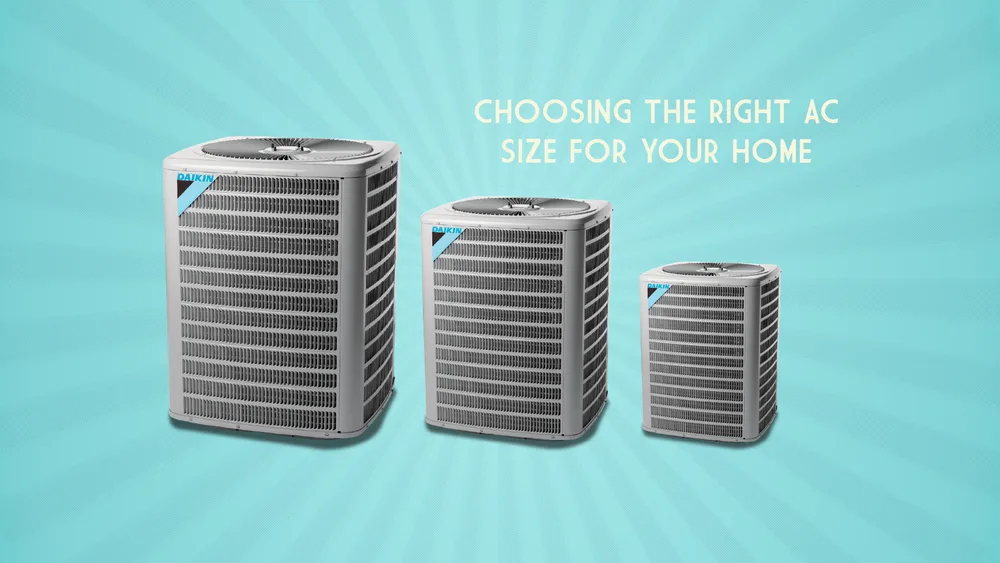
AC size means cooling capacity, not the dimensions of the outdoor cabinet. One ton of cooling equals 12,000 BTU per hour. Choosing the right capacity starts with your home's cooling load—not simply matching a neighbor's equipment or buying the largest unit available.
When a system is too large
An oversized system may satisfy the thermostat quickly and shut down before removing enough moisture. Short cycling can also create uneven temperatures and unnecessary starts and stops. Variable-capacity equipment can help match changing demand, but it still needs appropriate sizing.
Humidity issues do not prove that the AC is oversized. Air leaks, duct problems, airflow settings and moisture sources also deserve investigation.
When a system is too small
An undersized system may struggle to maintain temperature during peak conditions. However, a long run on a very hot day is not automatically a fault. Cooling systems are designed around specific outdoor conditions, and some variable-speed systems intentionally run for long periods at lower output.
Before recommending replacement, a technician should consider equipment condition, refrigerant operation, ducts, insulation and airflow.
What determines your home's cooling load?
- Floor area, ceiling height and room layout.
- Insulation and building air leakage.
- Window area, glass type, shading and orientation.
- Local outdoor design conditions.
- Occupants and indoor heat sources.
- Duct location, insulation and leakage.
Square footage alone cannot capture these differences. A fixed “square feet per ton” shortcut is not a substitute for a proper calculation.
Ask for a Manual J load calculation
A residential Manual J calculation estimates the home's heating and cooling requirements from its actual characteristics. Room-by-room results can help identify distribution needs. Equipment selection and duct design then need to support those calculated loads.
Ask what assumptions were used and whether the calculation reflects recent insulation, window or room-addition changes. Replacing an old system with the same nominal capacity can repeat an earlier sizing mistake.
Capacity and efficiency are different
Tonnage describes cooling capacity. SEER2 describes seasonal cooling efficiency under standardized test conditions. A higher efficiency rating does not mean the system should be larger, and the installed rating depends on the approved indoor/outdoor equipment match.
Ask for the exact models, capacity and AHRI-rated combination in your proposal. Compare installation scope, airflow checks and warranty terms alongside equipment ratings.
Prepare for your assessment
Write down hot rooms, humidity concerns, unusual cycling and recent changes to the house. Share utility history if available. Keep accessible filters and registers clear, but leave electrical, refrigerant and internal equipment work to a qualified professional.
Explore installation options or use our system planning tool to start a conversation. The tool does not replace an on-site load calculation or a written proposal.
Original article
Adapted from StayCool's AC sizing guide.